Principle of Venturi flowmeter
Price:¥1.00Quantity:9999
Market Price:¥1.00Reduced Price:¥1.00
Effevtive Time:6/30/2026
Sale Address:SilverProduction Address:Silver automation instruments
Keywords:Working principle of Venturi tube flowmeter | Working principle of Venturi tube flowmeter | Working principle of Venturi tube flowmeter|
Phone:QQ:Click:Wechat: +86 13512131526
Company:SILVER AUTOMATION INSTRUMENTS
『Principle of Venturi flowmeter』Related information(clamp on meter|electromagnetic meter|venturi meterrotameter|orifice meter|ultrasonic flow meter|mass flow meter|coriolis mass flow meter|coriolis flow meter|magnetic flow meter|magmeter flow meter|magflow flow meter|mag meter flow meter|electromagnetic flow meter|vortex flow meter|turbine flow meter|thermal mass flow meter|thermal flow meter|rotameter flow meter)

1. Working principle of Venturi tube flowmeter
The working principle of Venturi tube flowmeter mainly includes the following points: the flow chamber flows through the throttling element: when the fluid fills the Venturi tube flowmeter pipeline and flows through the throttling element inside the pipeline, the flow velocity will form local contraction at the throttling element. As the flow rate increases, the static pressure decreases. Due to the action of the throttle element, the flow rate will increase at the contraction point, while the static pressure will decrease. Generating pressure difference: A pressure difference is generated before and after the throttle element, which is directly related to the fluid flow rate. The larger the flow rate, the greater the pressure difference: The larger the fluid flow rate, the greater the pressure difference generated when passing through the throttling element. We can estimate the flow rate by measuring this pressure difference. Based on physical laws: This measurement method has a scientific basis and is based on physical laws such as flow continuity equation and Bernoulli equation to work on the circular stove. However, it should be noted that the magnitude of the pressure difference is not only related to the flow rate, but also to factors such as the form of the throttling device and the physical properties of the fluid inside the pipeline.
2. Working principle of Venturi tube flowmeter
The working principle of Venturi tube flowmeter is based on the pressure difference generated when the fluid flows through the throttling element to measure the flow rate.
. Specifically, fluid contraction caused by throttling: When the fluid flows through the t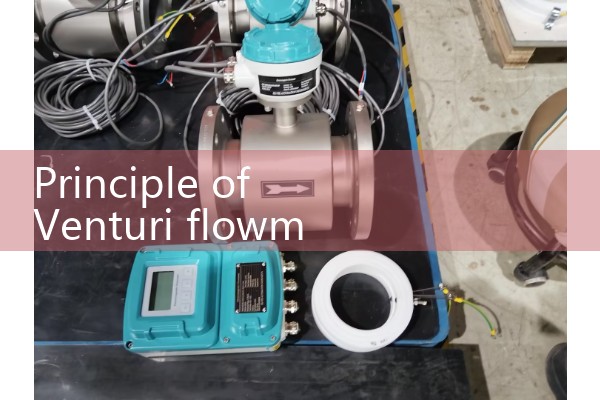 hrottling element in the Venturi flowmeter pipeline, the flow velocity will form local contraction at the throttling element, resulting in an increase in flow velocity. Static pressure reduction and pressure difference generation: Due to the increase in flow rate, the static pressure at the throttling element will decrease, resulting in a pressure difference before and after the throttling element. The relationship between flow rate and pressure difference: The larger the fluid flow rate, the greater the pressure difference generated before and after the throttling element. This relationship allows the size of the flow to be inferred by measuring the pressure difference. Theoretical basis: This closed stroke measurement method is based on the flow continuity equation and Bernoulli equation. Other influencing factors include the size of the pressure difference, which is not only related to the flow rate, but also influenced by various factors such as the form of the throttling device and the physical properties of the fluid inside the pipeline. Therefore, when using a Venturi tube flow state flowmeter for flow measurement, these factors need to be considered to ensure measurement accuracy.
3. Why is the Venturi flowmeter p1-p2=ρ gh? The Venturi flowmeter is a flowmeter based on the principle of differential pressure, used to measure the flow rate of fluid in pipelines. In the Venturi flowmeter, the differential pressure (△ P) is measured through two pressure measuring points (P1 and P2) in the pipeline. Under ideal conditions, the differential pressure △ P can be calculated using the following formula: △ P=ρ gh. Among them, ρ is the density of the fluid, g is the gravitational acceleration, and h represents the ve『SILVER Official Website SERVICE』



 Hot Product
 Related AD