

『Full Bore Flow Meter Engineering: Comparing Inline Full-Bore Magmeters vs Insertion Type Elements』Related information(clamp on meter|electromagnetic meter|venturi meterrotameter|orifice meter|ultrasonic flow meter|mass flow meter|coriolis mass flow meter|coriolis flow meter|magnetic flow meter|magmeter flow meter|magflow flow meter|mag meter flow meter|electromagnetic flow meter|vortex flow meter|turbine flow meter|thermal mass flow meter|thermal flow meter|rotameter flow meter)
Full Bore Flow Meter Engineering: Inline Full-Bore Magmeters vs Insertion Type Elements
Quick Answer: Choose an inline full-bore magmeter for pipe sizes from DN15 to DN300 when accuracy of 0.2 to 0.5 percent matters. For DN400 and larger lines, an insertion type element cuts installed cost by 40 to 60 percent and allows hot-tap installation. Use a full-bore meter when the pipe runs full, the media has solids, and repeatability matters more than first cost.
What Full-Bore Means in a Magnetic Flow Meter
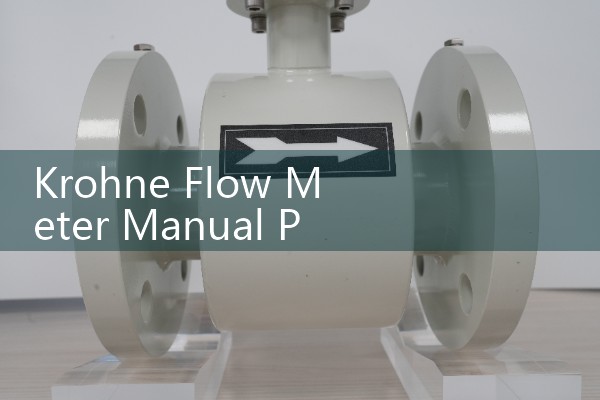
A full-bore inline magmeter has the same internal diameter as the process pipe. There is no reduction, no nozzle, and no dead zone. The sensor body matches DN15, DN25, DN40, DN50, DN80, DN100, DN150, and larger sizes up to DN2000. When the pipe runs full, the meter reads the whole cross section. This helps in water and wastewater lines where sludge or particles exist.
An insertion type element is different. You cut a tap into the pipe wall and insert a probe into the flow. The probe reads velocity at one point or a small area. The transmitter converts that point velocity to a flow rate using the pipe inside diameter. This works only if the velocity profile is stable. Most engineers skip this part during commissioning. We have seen many insertion meters mis-installed after an elbow or a partly open valve.
Accuracy and Repeatability Differences
Inline full-bore magmeters from Silver Automation Instruments deliver 0.2 percent to 0.5 percent of reading on conductive liquids from 5 µS/cm upward. Repeatability is often 0.1 percent. This matters for chemical dosing, billing, and process control.
Insertion type elements usually give 1.0 percent to 2.5 percent of reading depending on installation. The accuracy depends on straight run, insertion depth, pipe roundness, and flow profile. In practice, many engineers specify 10 diameters of straight pipe before the insertion probe and 5 diameters after. A full-bore meter can work with 5 diameters before and 2 after if a grounding ring is not needed.
We have seen this on customer sites many times. An insertion meter placed after a partially closed butterfly valve over-reports flow by 3 to 5 percent. The same installation with a full-bore meter stays stable because it reads the entire cross section.
Installation and Pipe Size Limits
Full-bore meters install between flanges. Wafer style works for DN15 to DN250. Flanged style works for DN300 to DN2000. You need a pipe run that is full of liquid at all times. Do not use a full-bore magmeter on partially full gravity drains unless the outlet creates a back pressure seal.
Insertion probes are hot-tapped into DN200 to DN3000 pipes. Hot-tap installation costs less because you do not cut out a spool. You also avoid plant shutdown on live water lines. A water utility in Malaysia installed three insertion probes on DN500 raw water lines during operation. That saved one full day of downtime per line.
Cost Comparison on DN300, DN600, and DN1000
For DN300, an inline full-bore meter costs about twice as much as an insertion setup installed. At DN600, the gap grows. A full-bore meter with flanges, grounding rings, and liner costs three to five times more. By DN1000, the full-bore meter can cost six to eight times more. This is why many water network projects use insertion elements on large lines.
But first cost is not total cost. A full-bore meter rarely needs recalibration after the factory test. An insertion probe may need annual verification because the tip wears in slurry or raw water. In a chemical plant in Thailand, a DN400 insertion probe on a brine line lost accuracy after eight months. The plant switched to a full-bore PTFE
Recommended Silver Instruments Models
Silver Automation Instruments supplies the SIL-MAG-FB inline full-bore electromagnetic flow meter series from DN10 to DN2000. Standard liners are PTFE, hard rubber, and polyurethane. Electrode materials include 316L stainless steel, Hastelloy C, titanium, and tantalum. Output is 4-20 mA HART, pulse, and RS485 Modbus. Accuracy is 0.5 percent of reading, with 0.2 percent as an option for DN25 to DN500.
For insertion type elements, Silver Instruments offers the SIL-INS-MAG probe for DN200 to DN3000. The probe fits carbon steel, ductile iron, and HDPE pipes. The transmitter has 4-20 mA HART and a local display. It suits raw water, cooling water, and wastewater lines where the process cannot stop.
Tell us your pipe size in DN, flow range in m3/h, pressure in bar, temperature in °C, and conductivity in µS/cm. Our engineers will recommend the right model and liner.
Application Cases from Asia Pacific and Latin America
A paint manufacturer in Vietnam uses a DN25 inline full-bore meter on a solvent based coating line. The PTFE liner prevents coating build-up. The meter reads 0 to 10 m3/h with 0.5 percent accuracy. The previous insertion probe blocked after two months because the point sensor was too small.
A desalination plant in Chile uses a DN700 insertion element on seawater intake. The pipe is always full during operation. The insertion probe has a titanium tip to handle seawater at 52 000 µS/cm. Accuracy of 2 percent is enough for intake flow monitoring. The plant saved 70 percent in installed cost compared to a full-bore DN700 meter.
Which One to Choose
Choose an inline full-bore magmeter if the pipe size is DN300 or smaller, the liquid is conductive above 5 µS/cm, and you need 0.5 percent or better accuracy. Choose a full-bore meter on chemical, food, and pharmaceutical lines where liners and electrode materials matter.
Choose an insertion type element if the pipe size is DN400 or larger, shutdown is not possible, and accuracy of 1 to 2.5 percent is acceptable. It fits raw water, cooling water, and seawater intake monitoring.
Frequently Asked Questions
Q1: Can an insertion magmeter replace a full-bore magmeter on DN250?
Yes but the accuracy drops from 0.5 percent to about 1.5 percent. On DN250, the price gap is small enough that most users choose the full-bore meter.
Q2: What conductivity is required for both types?
Both need a minimum liquid conductivity of 5 µS/cm. Demineralized water and some organic solvents below 5 µS/cm will not read correctly on electromagnetic meters.
Q3: Can I install an insertion element hot tap?
Yes, on metal and HDPE pipes from DN200 to DN3000 you can install under pressure. Use a ball valve hot tap assembly. Do not hot tap lined pipes or pipes with internal coatings that can crack.
Q4: Which liner is best for wastewater?
Use polyurethane or hard rubber for abrasive wastewater. Use PTFE for chemicals and high temperature up to 150 °C. Tell us your temperature in °C before we quote.
Q5: What output options does Silver Instruments provide?
Both inline and insertion meters provide 4-20 mA HART, pulse, and RS485 Modbus. Battery powered options are also available for remote sites without power.
Contact Silver Automation Instruments for a quote. Tel: +86-135-1213-1526. Whatsapp: 86-135-12131526. WeChat: +86 13512131526. Send us your pressure in bar, temperature in °C, pipe size in DN, and flow range. We reply within 24 hours on business days.
 Hot Blog
 Related AD