

『Daniel Venturi Flow Meter: Traditional Differential Pressure Geometry Elements』Related information(clamp on meter|electromagnetic meter|venturi meterrotameter|orifice meter|ultrasonic flow meter|mass flow meter|coriolis mass flow meter|coriolis flow meter|magnetic flow meter|magmeter flow meter|magflow flow meter|mag meter flow meter|electromagnetic flow meter|vortex flow meter|turbine flow meter|thermal mass flow meter|thermal flow meter|rotameter flow meter)

Daniel Venturi Flow Meter: Traditional Differential Pressure Geometry Elements
Quick Answer: A Daniel venturi flow meter uses traditional differential pressure geometry with a convergent inlet cone, a cylindrical throat, and a divergent outlet cone. This geometry creates a stable low pressure signal for liquid, gas, and steam flow. Silver Automation Instruments supplies venturi flow meters and DP transmitters for process lines from DN25 to DN600 with 4-20 mA HART output.
Most engineers specify a Daniel venturi flow meter when they need a primary element that can handle high velocity, dirty liquids, or limited straight pipe run. The geometry reduces permanent pressure loss compared to an orifice plate. We see this in water injection lines, gas distribution, and steam boiler feed systems across Southeast Asia and the Middle East.
What Is a Daniel Venturi Flow Meter?
A Daniel venturi flow meter is a differential pressure flow element. It follows the traditional venturi geometry established in older Daniel measurement handbooks. The meter body includes a short inlet cylinder, a convergent section, a throat, and a divergent recovery section.
The flow passes through the throat after the convergent section. Pressure taps sit at the inlet and throat. A DP transmitter reads the pressure difference. The signal scales to flow rate using the square root relationship.
Here is the thing. Venturi meters do not need a sharp edge. That means they tolerate solids, slurry, wet steam, and high temperature gas better than orifice plates. A cement plant in Vietnam uses one on a hot air line because an orifice plate eroded within eight months.
Traditional Differential Pressure Geometry Elements
Traditional venturi geometry elements include these dimensions.
Inlet cone angle of 21 degrees.
Throat length from 0.5 to 1.0 times throat diameter.
Outlet cone angle between 7 and 15 degrees.
Beta ratio from 0.4 to 0.75 for most industrial lines.
The 21 degree inlet cone keeps flow acceleration stable. The 15 degree outlet cone recovers pressure. The throat length keeps the low pressure signal steady. These dimensions come from older ISO 5167 and Daniel venturi designs.
We keep the geometry simple on purpose. Complex shapes cost more to machine and add little accuracy in field installations.
Why Geometry Still Matters in DN25 to DN600 Lines
Geometry controls the discharge coefficient. A small change in throat diameter shifts the DP signal more than a transmitter error. On a DN100 venturi with beta ratio 0.6, a 0.1 mm throat error can shift flow output by about 0.5 percent.
But geometry alone does not guarantee accuracy. Installation matters too. Most engineers skip this part during vendor review. Then the installed accuracy is worse than the quoted accuracy. We have seen this on customer sites many times.
Because the DP signal follows a square root curve, low flow readings below 10 percent of span need a transmitter with good low cut and linearization. Silver Instruments DP transmitters include this as standard.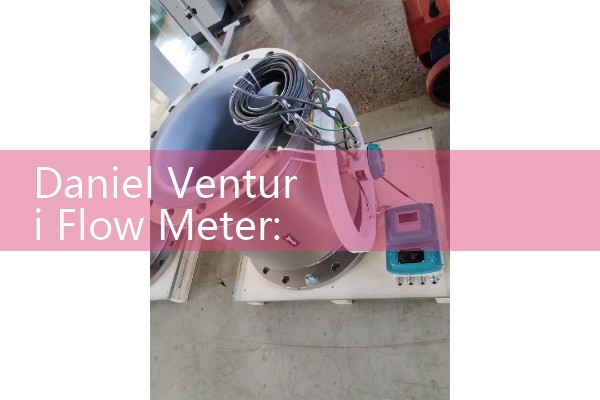 >
>
Typical Applications We See
Water and wastewater plants in the Middle East use venturi flow meters on chlorine contact tank feed lines. The straight pipe run is short. The venturi handles the low conductivity water better than a magnetic flow meter at some locations.
Oil and gas customers in Southeast Asia use venturi elements on flare gas lines. A high temperature gas application in Thailand runs at 180 degrees Celsius and 6 bar. The venturi has no moving parts and no electronics in the pipe.
Steam boiler houses in Indonesia use venturi flow meters for saturated steam at 10 bar. The installed pressure loss is lower than an orifice plate. That saves fuel over a year.
Silver Instruments Venturi Flow Meter Supply and Technical Support
We supply venturi primary elements and differential pressure flow transmitters as a package. The flow meter output is 4-20 mA HART. We can add a flow computer or use the DP transmitter internal totalizer for mass flow and energy flow.
Typical line sizes range from DN25 to DN600. Pressure ratings include PN16, PN40, ANSI 150, and ANSI 300. Body materials include carbon steel, 316 stainless steel, and duplex stainless steel. Process connections can be flanged, wafer, or welded.
We do not claim to be a Daniel original equipment manufacturer. We do supply venturi flow meters that follow traditional Daniel geometry elements. Many customers ask us for a replacement element after the original unit corrodes or after a process change.
Request a Quote with Your Process Data
Send us your pressure in bar, temperature in degrees Celsius, pipe size in DN, flow range in kg/h or m3/h, and fluid type. We will reply with a venturi size, beta ratio, DP span, and price.
Contact Silver Automation Instruments today. Tel: +86-135-1213-1526. Whatsapp: 86-135-12131526. WeChat: +86 13512131526. Website: flow-meter.com.au
FAQ
What is the typical accuracy of a Daniel venturi flow meter?
For a machined venturi with traditional geometry, expect accuracy from 0.5 to 1.0 percent of rate. With a precisely machined throat and proper upstream straight pipe, 0.5 percent is realistic for liquid.
Can a venturi flow meter handle dirty liquids?
Yes. The smooth convergent inlet and straight throat allow solids to pass through. It does not rely on a sharp edge like an orifice plate.
What straight pipe run does a venturi flow meter need?
Less than an orifice plate. For a beta ratio of 0.5, plan for 5 to 10 upstream diameters after a single elbow. A flow conditioner can reduce this to 3 upstream diameters.
What output options does Silver Instruments offer?
We offer 4-20 mA HART output from the DP transmitter. We can also provide Modbus RS485, totalizers, and local digital displays.
Which industries use these venturi flow meters the most?
Water and wastewater, oil and gas, chemical, food and beverage, marine, and steam systems. The common reason is high temperature, dirty flow, or low permanent pressure loss.
 Hot Blog
 Related AD