

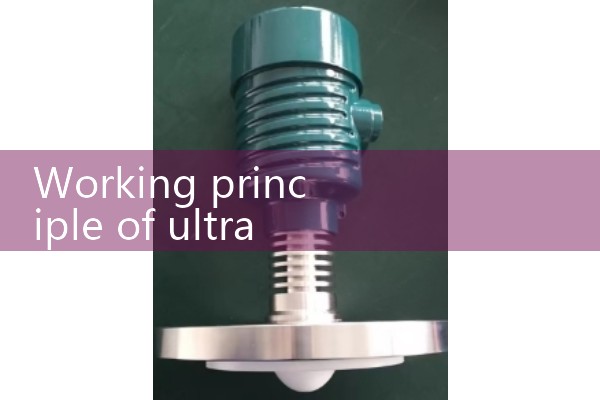
『Working principle of ultrasonic flowmeter』Related information(clamp on meter|electromagnetic meter|venturi meterrotameter|orifice meter|ultrasonic flow meter|mass flow meter|coriolis mass flow meter|coriolis flow meter|magnetic flow meter|magmeter flow meter|magflow flow meter|mag meter flow meter|electromagnetic flow meter|vortex flow meter|turbine flow meter|thermal mass flow meter|thermal flow meter|rotameter flow meter)

1. Working principle of multi-channel ultrasonic flowmeter
The working principle of multi-channel ultrasonic flowmeter is to use ultrasonic detection technology to measure the sound velocity difference, pressure, and temperature of ultrasonic waves propagating in the forward and reverse directions of the airflow, in order to calculate the gas flow rate and the gas flow rate under standard conditions. The following is a detailed explanation: The working principle of a multi-channel ultrasonic flowmeter is based on the propagation characteristics of ultrasonic waves in fluids. When ultrasound propagates in a fluid, its propagation speed is affected by the fluid velocity. Specifically, the speed of ultrasonic waves propagating downstream will be faster than that propagating upstream, and this speed difference is proportional to the flow velocity of the fluid. Ultrasonic propagation: The flowmeter emits ultrasonic pulses through a transducer, which propagate in both forward and reverse directions in the fluid. The ultrasonic propagation distance L between transducers and the angle θ between the ultrasonic propagation direction and the axis are known. Measuring Sound Velocity Difference: The flowmeter measures the sound velocity difference of ultrasonic waves propagating in both forward and reverse directions. This sound indicates the speed difference of the stove, which reflects the flow velocity of the fluid. Calculate flow velocity and flow rate: By using the known inner diameter D of the pipeline, ultrasonic propagation distance L, angle θ, and measured sound velocity difference, the flow velocity v of the fluid can be calculated. The flow velocity v is further converted into the gas flow rate Q under standard
 Hot Blog
 Related AD