

 Current position > Product detail
『Oil Flow Meter -20C: Managing Fluid Solidification in Northern Field Lines』Related information(clamp on meter|electromagnetic meter|venturi meterrotameter|orifice meter|ultrasonic flow meter|mass flow meter|coriolis mass flow meter|coriolis flow meter|magnetic flow meter|magmeter flow meter|magflow flow meter|mag meter flow meter|electromagnetic flow meter|vortex flow meter|turbine flow meter|thermal mass flow meter|thermal flow meter|rotameter flow meter)
Oil Flow Meter -20C: Managing Fluid Solidification in Northern Field Lines
Quick Answer: Oil flow measurement at -20°C often fails because fluid turns solid and blocks the meter. Silver Automation Instruments solves this with oval gear flow meters that include heated jackets or Coriolis mass flow meters with heat tracing. Send us your viscosity (cP), pipe size (DN), and required Ex zone for a direct quote.
The Real Problem in Siberian and Canadian Oil Fields
Oil fields in West Siberia, Northern Kazakhstan, or Alberta operate at ambient temperatures well below -20°C for months. Crude oil with high wax content or diesel with low cloud point can solidify in the pipe. When the fluid stops flowing or becomes paste-like, the meter stops working. Standard turbine or positive displacement meters without heating will seize. We have seen this on customer sites many times. A frozen meter cracks internal parts or stalls the mechanical gear train. Repair often means full replacement.
Most engineers skip this part during initial design. They choose a meter based on flow range and accuracy but forget the minimum operating temperature of the fluid. At -20°C, even light crude can deposit paraffin inside the measuring chamber. The result is no signal, no pulse output, or erratic 4-20 mA values.
Oval Gear Flow Meter with Heating Jacket – Field-Proven Choice
Silver Instruments offers oval gear flow meters (OGF series) with stainless steel or aluminum heating jackets. The jacket wraps around the meter body. Hot water, steam, or electric trace heating up to 120°C keeps the oil above its pour point. We have supplied OGF-DN25 and OGF-DN50 models to a contractor in Tomsk, Russia. They measure crude oil with viscosity 450 cP at 20°C. The jacket uses low-voltage electric heating (24 V DC) with a PT100 sensor for temperature feedback. The meter body stays at +30°C even when ambient is -40°C. Accuracy stays at ±0.5% of reading.
The oval gear principle works well with viscous fluids. Dual gears rotate in tight clearance. As oil pushes the gears, each pocket displaces a known volume. The magnetic pickup sends a pulse train. No straight pipe run is needed. Pressure loss is low. The meter can handle flows from 0.05 to 250 m³/h depending on DN size. For cold applications, we recommend a cast steel body with FPM or PTFE seals. The heating jacket is an add-on. You can order the jacket with the meter or retrofit later.
Here is the thing. If you already have an oval gear meter without a jacket, you can wrap heat trace cable directly around the housing. But a factory integrated jacket gives uniform heat and avoids hot spots. It also simplifies Ex certification. Our OGF meters with jacket carry ATEX Zone 1 and IECEx certification for gas and dust.
Coriolis Mass Flow Meter for Oil at -20°C – No Moving Parts Risk
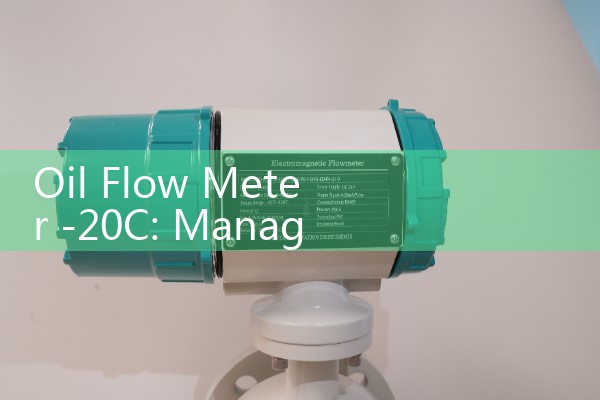
When the oil viscosity changes a lot or you need mass flow directly, a Coriolis meter is a better option. Silver Instruments CMF series can operate down to -50°C process temperature. There is no mechanical chamber to freeze. The U-shape or straight tube vibrates. Even waxy crude at -20°C flows through without blocking if you apply external heat tracing. The meter measures mass flow in kg/h, density in kg/m³, and temperature. Density output helps indicate solidification risk. If density spikes, you know the fluid is gelling.
A customer in Atyrau, Kazakhstan, runs a CMF-DN15 meter on a heating oil line. Ambient rea
We have seen Coriolis meters in North Slope projects too. Because there is no bypass, the meter does not cause a flow stop if power fails. The tube just stays static. However, you must ensure the pipe itself does not freeze. Heat management is still critical for the whole pipeline.
Installation Tips for Northern Pipelines
Insulate the meter and associated piping with 50 mm thick rock wool or foam glass. Do not leave the meter exposed to wind chill. Use a weatherproof enclosure or shelter. Drain valves help to empty the meter when the line shuts down for a long period. We always advise a low-flow start-up procedure. Heat the line gradually. No sudden hot oil shock that can crack the meter casting. Temperature sensors (PT100) installed upstream and at the meter body give early warning.
For oval gear meters, install a Y-strainer upstream. Cold oil often carries wax crystals that can jam the gears. The strainer mesh should be 40-60 depending on meter size. Clean it regularly. In remote well pads without power, a mechanical counter with pulse output to a solar-powered RTU works fine.
Contact Silver Automation Instruments
Tell us your working conditions. We need fluid type, minimum temperature, operating viscosity, pipe diameter (DN), flow range, and pressure rating. Also mention if you need explosion-proof certification (ATEX, IECEx, or EAC for CIS countries). Our team will suggest the right meter, heating method, and mounting accessories. Email us at [email protected] or call +86-135-1213-1526. You can also reach us on WhatsApp at 86-135-12131526 or WeChat +86 13512131526. A typical quotation for an OGF-DN25 with electric jacket takes 2 working days.
FAQ
1. What happens to a flow meter when crude oil solidifies at -20°C?
The meter stops producing an output. The moving parts may lock. If the oil expands during melting, it can crack the housing. A heated jacket prevents this.
2. Which flow meter type is best for cold northern oil fields?
For heavy oil, an oval gear meter with heating jacket. For mass flow and density, a Coriolis mass flow meter with trace heating. Both are reliable at -20°C when installed with insulation.
3. Do oval gear meters with jackets need extra maintenance in freezing conditions?
Yes. Check the seal condition and filter element regularly. Wax buildup still happens if temperature control fails. Flush the meter with hot diesel after long shutdowns.
4. Can a Coriolis meter measure heavy oil at -20°C without breaking?
Yes, if the pipeline is heated and the process temperature stays above pour point. The Coriolis meter tube itself withstands -50°C. But you must prevent freezing in the pipe ahead of it.
5. How do I order a -20°C oil flow meter from Silver Instruments?
Send an email with your fluid specs (viscosity, temperature, density, flow range), pipe size, and hazardous area classification. We will provide a quotation within 24-48 hours. Use [email protected] or call +86-135-1213-1526. Our engineers will support installation tips for cold climates.