

 Current position > Product detail
『Gas waist wheel flowmeter』Related information(clamp on meter|electromagnetic meter|venturi meterrotameter|orifice meter|ultrasonic flow meter|mass flow meter|coriolis mass flow meter|coriolis flow meter|magnetic flow meter|magmeter flow meter|magflow flow meter|mag meter flow meter|electromagnetic flow meter|vortex flow meter|turbine flow meter|thermal mass flow meter|thermal flow meter|rotameter flow meter)
1. Differences and application scenarios between turbine flowmeter and waist wheel flowmeter
Decrypt the differences between turbine flowmeter and waist wheel flowmeter to help you understand their advantages and applicability in different application scenarios. The principle and characteristics of turbine flowmeter. Turbine flowmeter is a common type of flowmeter, and its working principle is based on the relationship between the rotational speed of turbine blades and fluid flow velocity. By measuring the rotational speed of turbine blades, the fluid flow rate can be accurately calculated. Turbine flow meters have the following characteristics: 1. High precision: Turbine flow meters have high measurement accuracy, usually up to ±. 5%. 2. Wide measurement range: Turbine flow meters are suitable for large-scale flow measurement, covering various working conditions from low to high flow rates. 3. Fast response: Turbine flow meters have a fast response speed to flow changes and are suitable for application scenarios that require real-time monitoring of flow changes. The principle and characteristics of the waist wheel flowmeter. The waist wheel flowmeter is another common type of flowmeter, and its working principle is based on the pressure difference generated when the fluid passes through the waist wheel. By measuring the pressure difference on both sides of the waist wheel, the fluid flow rate can be calculated. The waist wheel flowmeter has the following characteristics
1. Simple structure: The waist wheel flowmeter has a simple structure, consisting of a waist wheel and a sensor, which is easy to install and maintain
2. Low pressure loss: The pressure loss of the waist wheel flowmeter is small, a
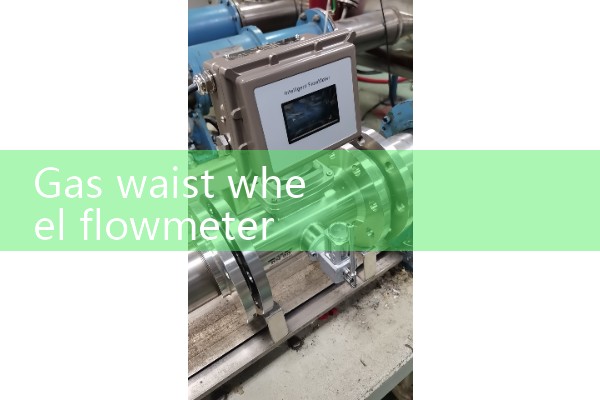
3. Suitable for clean fluids: The waist wheel flowmeter is suitable for clean liquid and gas fluids, and is not suitable for fluids containing particles or corrosive substances.
. Comparison of Application Scenarios between Turbine Flowmeters and Lumbar Wheel Flowmeters 1 Turbine flow meters are suitable for high-precision flow measurement, such as process control and measurement in industries such as petrochemicals and pharmaceuticals. 2. Lumbar wheel flow meters are suitable for general flow measurement, such as flow monitoring and measurement in water and gas supply fields. There are significant differences in the working principle, characteristics, and application scenarios between turbine flow meters and waist wheel flow meters. Choosing the appropriate type of flow meter based on specific flow measurement requirements can improve measurement accuracy and system stability. Flow meter turbine flow meter2. Detailed introduction of waist wheel flow meter
The waist wheel flow meter is mainly used for measuring the flow of gas, liquid, and steam medium fluids with large diameters in industrial pipelines in various industries. The characteristics of waist wheel flowmeter are small pressure loss, large range, high accuracy, and almost no influence of fluid density, pressure, temperature, viscosity and other parameters when measuring volumetric flow rate under working conditions. There are no movable mechanical parts, so it has high reliability and low maintenance. The instrument parameters can work stably for a long time. The plug-in waist wheel flowmeter adopts a piezoelectric stress sensor with high reliability and can operate within a temperature range o